




Can an industrial shredder be used for shredding fiberglass?
 Jan 21, 2026|
 In the realm of industrial waste management and material recycling, the question of whether an industrial shredder can be used for shredding fiberglass is one that often arises. As a leading supplier of Industrial Shredder, I am frequently asked about the capabilities and limitations of our equipment when it comes to handling various materials, including fiberglass. In this blog post, I will delve into the technical aspects of fiberglass, the functionality of industrial shredders, and evaluate the feasibility of using an industrial shredder for fiberglass shredding.
Understanding Fiberglass
Fiberglass is a composite material composed of fine glass fibers embedded in a polymer matrix. This material is known for its high strength, low weight, and resistance to corrosion, making it a popular choice in a wide range of industries, including automotive, aerospace, construction, and marine. Fiberglass products can take many forms, such as sheets, pipes, rods, and insulation materials.
One of the key characteristics of fiberglass is its toughness and abrasiveness. The glass fibers within the composite structure are extremely hard and can cause significant wear and tear on cutting tools and machinery components. Additionally, fiberglass has a tendency to fray and produce fine dust particles during the cutting or shredding process, which can pose health and safety risks to operators if not properly managed.
How Industrial Shredders Work
Industrial shredders are powerful machines designed to reduce the size of large materials into smaller pieces. They typically consist of a cutting chamber, a set of rotating blades or cutters, and a drive system that powers the blades. The material to be shredded is fed into the cutting chamber, where the blades slice, tear, and crush it into smaller fragments.
There are several types of industrial shredders available, each with its own unique design and functionality. Some of the most common types include single-shaft shredders, twin-shaft shredders, and four-shaft shredders. Single-shaft shredders are typically used for light to medium-duty applications, while twin-shaft and four-shaft shredders are more suitable for heavy-duty shredding tasks.
In addition to the shredder itself, industrial shredding systems often include auxiliary equipment, such as Conical Force Feeder and Plastic Grinder Pulverizer Machine, to ensure efficient and reliable operation. The conical force feeder can improve the feeding efficiency of materials, especially for irregular-shaped materials, while the plastic grinder pulverizer machine can further process the shredded materials to achieve a finer particle size.
Challenges of Shredding Fiberglass
Shredding fiberglass presents several challenges that must be carefully considered before using an industrial shredder. One of the primary challenges is the high abrasiveness of fiberglass, which can quickly wear down the blades and other cutting components of the shredder. This can lead to frequent blade replacements, increased maintenance costs, and reduced overall productivity.
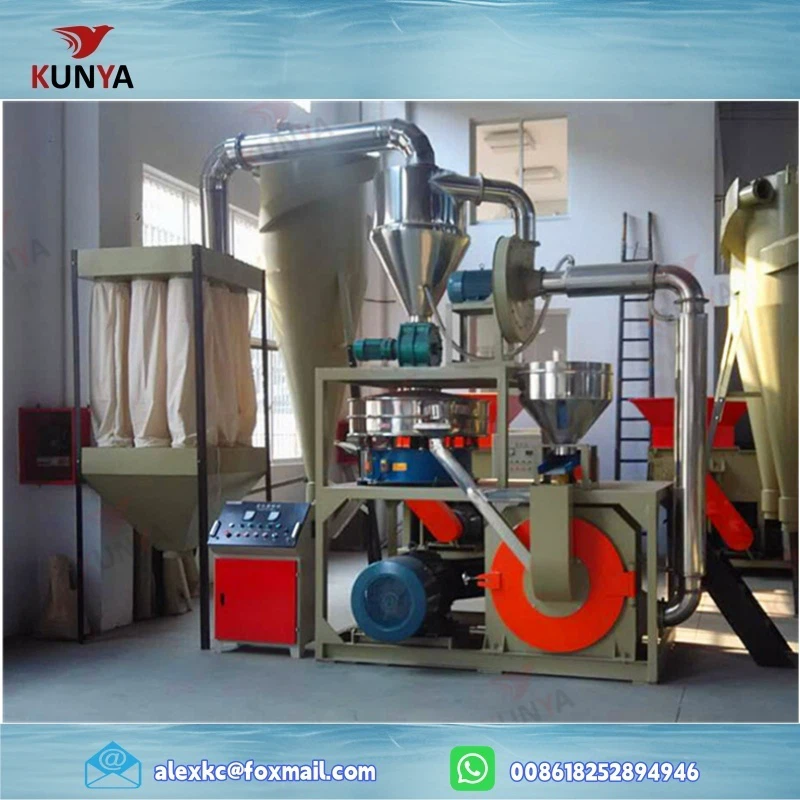

Another challenge is the generation of fiberglass dust during the shredding process. Fiberglass dust is a known irritant and can cause respiratory problems, skin irritation, and eye damage if inhaled or come into contact with the skin or eyes. Therefore, proper dust collection and ventilation systems must be in place to ensure the safety of operators and comply with environmental regulations.
In addition, fiberglass can be difficult to feed into the shredder due to its rigid and irregular shape. This can result in jamming and clogging of the shredder, which can cause downtime and damage to the machine. To overcome this challenge, a specialized feeding system, such as a conical force feeder, may be required to ensure a consistent and reliable feed rate.
Feasibility of Using an Industrial Shredder for Fiberglass
Despite the challenges, it is possible to use an industrial shredder for shredding fiberglass with the right equipment and operating procedures. To ensure successful fiberglass shredding, the following factors should be considered:
Shredder Design
The design of the shredder is crucial for handling fiberglass effectively. A shredder with heavy-duty blades and a robust cutting chamber is recommended to withstand the high abrasiveness of fiberglass. Twin-shaft or four-shaft shredders are often preferred for fiberglass shredding due to their higher torque and cutting force, which can help to break down the tough material more efficiently.
Blade Selection
The choice of blades is also critical for fiberglass shredding. Carbide-tipped or tungsten carbide blades are commonly used due to their high hardness and wear resistance. These blades can withstand the abrasive nature of fiberglass and provide a longer service life compared to standard steel blades.
Dust Collection and Ventilation
To minimize the health and safety risks associated with fiberglass dust, a comprehensive dust collection and ventilation system should be installed. This system should be capable of capturing and removing the fine dust particles generated during the shredding process, ensuring a clean and safe working environment.
Feeding System
As mentioned earlier, fiberglass can be difficult to feed into the shredder due to its rigid and irregular shape. A specialized feeding system, such as a conical force feeder, can help to overcome this challenge by providing a consistent and controlled feed rate. This can improve the efficiency of the shredding process and reduce the risk of jamming and clogging.
Benefits of Shredding Fiberglass
Despite the challenges, there are several benefits to shredding fiberglass using an industrial shredder. One of the primary benefits is the reduction of waste volume. By shredding fiberglass into smaller pieces, it can be more easily transported and disposed of, reducing the overall cost of waste management.
In addition, shredding fiberglass can also facilitate the recycling process. Fiberglass can be recycled into new products, such as insulation materials, fiberglass sheets, and automotive parts. By shredding fiberglass, it can be broken down into smaller particles, making it easier to process and recycle.
Conclusion
In conclusion, while shredding fiberglass using an industrial shredder presents several challenges, it is possible to overcome these challenges with the right equipment and operating procedures. By selecting a shredder with the appropriate design, blades, dust collection system, and feeding system, it is possible to achieve efficient and safe fiberglass shredding.
As a supplier of industrial shredders, we have the expertise and experience to help you select the right equipment for your fiberglass shredding needs. Our industrial shredders are designed to handle a wide range of materials, including fiberglass, and are built to last, providing reliable performance and low maintenance costs.
If you are interested in learning more about our industrial shredders and how they can be used for fiberglass shredding, please feel free to contact us. We would be happy to discuss your requirements and provide you with a customized solution that meets your needs. Take the first step towards efficient fiberglass waste management and recycling by reaching out to us today.
References
- "Fiberglass: Properties, Manufacturing, and Applications." Composite Materials Handbook.
- "Industrial Shredder Technology and Applications." Industrial Machinery and Equipment Journal.
- "Safety Guidelines for Handling Fiberglass Dust." Occupational Safety and Health Administration.